
Ashtanga Vinyasa Yoga
Ashtanga Vinyasa Yoga
Ashtanga Vinyasa Yoga is a dynamic style of yoga that involves synchronizing the breath with a progressive series of postures, a process that generates intense internal heat and a profuse, purifying sweat that detoxifies muscles and organs.
The result is improved circulation, a light and strong body, a calm mind, enhanced concentration, and increased awareness of inner thoughts and behavioral patterns.
This practice promotes healthier living and a more fulfilled life.
Ashtanga Yoga is an ancient system of Yoga that was taught by Vamana Rishi in the Yoga Korunta. This text was imparted to T. Krishnamacharya in the early 1900’s by his Guru Rama Mohan Brahmachari, and was later passed down to Pattabhi Jois during the duration of his studies with Krishnamacharya, beginning in 1927. Pattabhi Jois passed away in 2009 and continues the lineage of his grandson Sharath Jois, Director of the Ashtanga Yoga Institute in Mysore, India (KPJAYI), following the Parampara tradition.
Yoga practice is more than just physical exercise. Ashtanga is a Sanskrit word that means “eight limbs”, each limb is equally important in our yoga practice. The eight limbs are described in the Yoga Sutras by Patanjali: Yamas, Nyamas, Asana, Pranayama, Pratyahara, Dharana, Dhyana, Samadhi.
The following are aspects that Pattabhi Jois emphasizes as the main components of Ashtanga Yoga:
Vinyasa: Vinyasa means breathing and movement system. For each movement, there is one breath. The purpose of vinyasa is for internal cleansing. Breathing and moving together while performing asanas makes the blood hot, or as Pattabhi Jois says, boils the blood, removing impurities and disease. After the body is purified, it is possible to purify the nervous system, and then the sense organs.
Tristhana: This means the three places of attention or action: posture, breathing system and looking place. These three are very important for yoga practice, and cover three levels of purification: the body, nervous system and mind. They are always performed in conjunction with each other.
The six poisons: A vital aspect of internal purification that Pattabhi Jois teaches relates to the six poisons that surround the spiritual heart. In the yoga Shastra it is said that God dwells in our heart in the form of light, but this light is covered by six poisons: kama, krodha, moha, lobha, matsarya, and mada. These are desire, anger, delusion, greed, envy and sloth. When yoga practice is sustained with great diligence and dedication over a long period of time, the heat generated from it burns away these poisons, and the light of our inner nature shines forth.

Types of Classes / Courses
1. Mysore Style Classes
The term “Mysore Style” refers to the city of Mysore, India, where Guruji Sri K. Pattabhi Jois taught the traditional method of Ashtanga Yoga for over 70 years.
In these classes, students learn the sequence individually and gradually, in a way that suits their level and pace. Although practiced in a group setting, the instruction is highly personalized — it is an assisted self-practice.
Ashtanga Yoga views each student as unique, which is why the postures are adapted to the individual through one-on-one guidance. Some students may progress more quickly due to fitness or prior experience, while others may move more slowly due to health conditions or other factors.
The teacher offers support and adjustments at a rhythm that is appropriate for each student.
The ultimate goal of Mysore-style classes is to help students develop a personal, sustainable, and independent practice.
2. Led Class
During Primary Led classes, students are guided in unison through the postures of the Primary Series. The counting is done in Sanskrit, following the traditional method.
Led classes are a valuable opportunity to reinforce and refine your knowledge of the vinyasas, the names of the postures, and to build endurance and concentration.
3. Ashtanga Yoga Foundations
If you’ve never practiced yoga before, or if you come from another style and want to deepen your experience with Ashtanga Yoga, we recommend our Foundations Course, a one-month introduction offered within the Mysore-style classes.
For more information, contact us.
4. Private Class
One-on-one attention tailored to your level, flexibility, and physical condition — whether you’re starting your yoga journey or looking to deepen your practice by focusing on specific needs or conditions.
Flexible scheduling and fully personalized sessions designed to meet your goals
5. Ashtanga Yoga at work – Ashtanga Yoga back to business
If you’d like more information about our “Ashtanga Yoga Back to Business”program, feel free to contact us via email or phone.
With over 10 years of experience, we bring traditional Ashtanga Yoga to executives and managers in leading companies
— helping reduce stress, improve focus, and promote well-being in the workplace.
Moon Days
Traditionally, it is recommended to rest from asana practice on the days of the Full Moon and New Moon.
It is believed that during these lunar phases, our energy can swing between extremes, and both body and mind may be more sensitive to these fluctuations

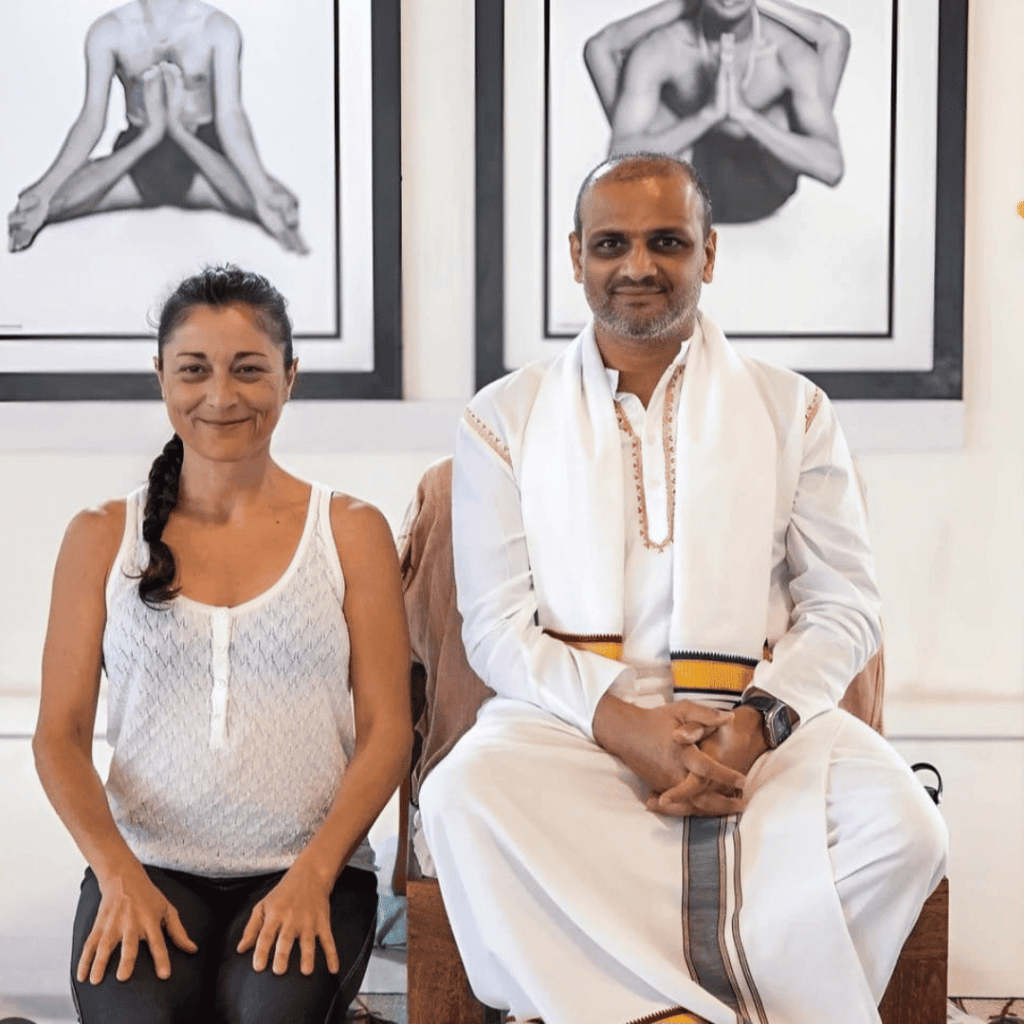


We are dedicated to the teaching of Ashtanga Yoga in its traditional form, honouring the lineage and wisdom of the practice, while embracing a human, open, and adaptive approach — both to the individuality and the specific needs of each student.
Quick Links
Get In Touch
We are dedicated to the teaching of Ashtanga Yoga in its traditional form, honouring the lineage and wisdom of the practice, while embracing a human, open, and adaptive approach — both to the individuality and the specific needs of each student.